Lawn fertilization
Serving Oshawa and Durham Region
- Season
- April to late October
- Frequency
- 3 to 4 times a year
- Typical visit
- Under an hour
The short answer
We feed Oshawa lawns 3 to 4 times a year, timed to the spring and fall growth spurts of the Kentucky bluegrass, perennial ryegrass and fescues that grow here. The blend and schedule are adjusted to your soil, since sandy ground needs more frequent feeding than clay.
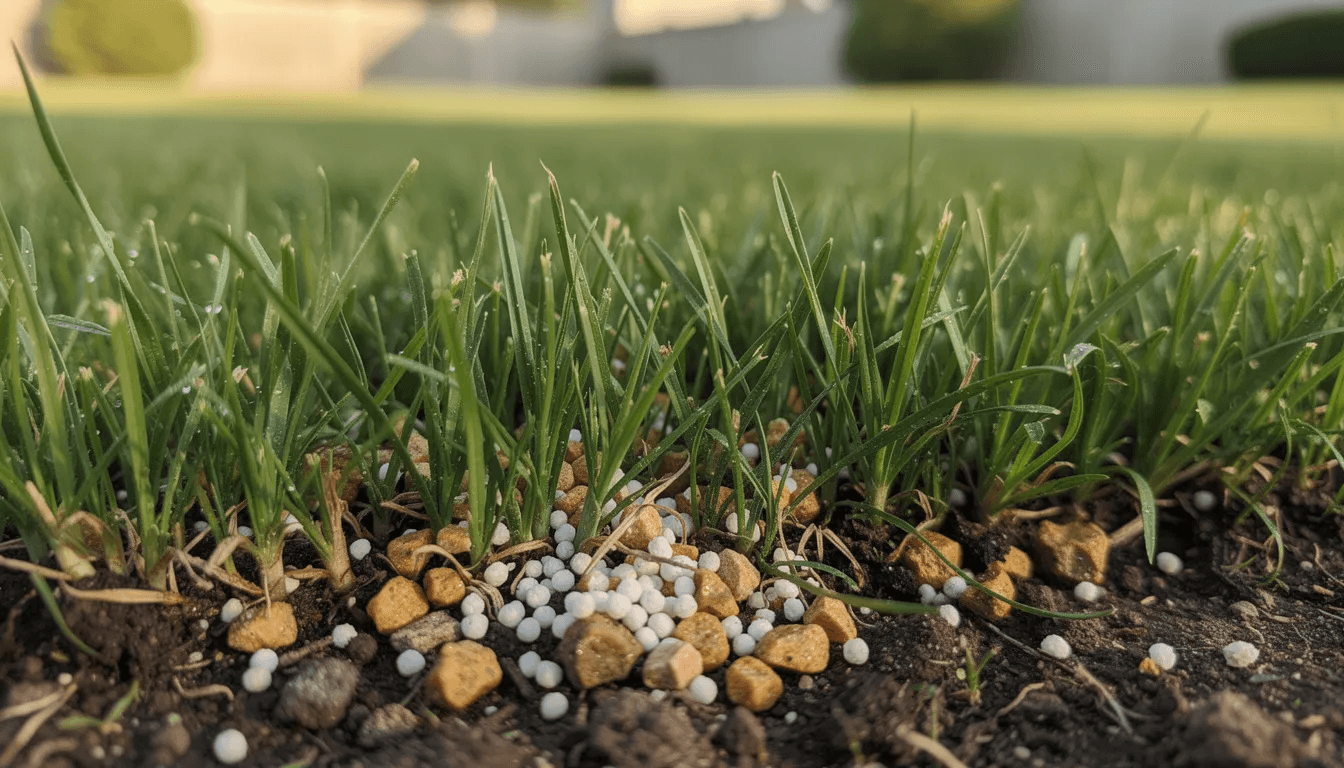
A hungry lawn does not complain, it just fades: paler colour each month, slower growth, thin spots that weeds quietly claim. By the time most people notice, the lawn has been underfed for a season or two. Fertilization is how we reverse that, and the schedule matters as much as the product.
How we feed a lawn through the year
- We start with the lawn, not the bag. Grass type, soil, shade and what the lawn has been fed before all decide the blend. Sandy soils need lighter, more frequent feeding; clay holds nutrients longer.
- We time each application to real growth. Cool-season grasses like Kentucky bluegrass, perennial ryegrass and the fescues grow hard in spring and fall and coast through summer, so that is when the feedings land.
- We apply evenly and edge carefully. Calibrated spreaders, overlap kept consistent, granules swept off pavement so they feed grass instead of washing into storm drains.
- We tell you what to do next. Usually just one thing: water it in, or let the forecast rain do it for you.
When to fertilize in Oshawa
The season runs April to late October, with 3 to 4 applications across it. The two windows that carry the programme are spring, when the lawn is spending winter reserves and needs restocking, and fall, when the grass banks nutrients in its roots for next year. The late October feeding is the one homeowners skip most often and the one we would keep if we could only keep one. Organic options are available for every application if you prefer them.
Signs your lawn is running on empty
Pale or yellow-green colour that a good rain does not fix. Growth so slow you barely need to mow in May, when everything should be surging. Clover spreading, since clover makes its own nitrogen and thrives exactly where grass is starving. Any of these means the soil has less to give than the lawn needs.
Feeding works best on soil the roots can actually use, so on compacted clay we often pair it with core aeration, and a thicker, well-fed lawn does half the work of weed control by itself. Request a free quote and we will build a feeding schedule around your lawn, not a generic calendar.
What's included
- Assessment of grass type, soil and shade before the first feeding
- 3 to 4 applications timed to spring and fall growth
- Blends matched to Kentucky bluegrass, ryegrass and fescue lawns
- Schedule adjusted for sandy or clay soil
- Organic fertilizer options on request
- Watering advice after each application
Fertilization, answered
How often should a lawn be fertilized in Ontario?
3 to 4 times a year for most lawns: early spring, late spring, and one or two fall feedings. More than that wastes product and pushes soft, disease-prone growth; less and the lawn thins out by midsummer.
When will I see results after fertilizing?
Colour deepens within 1 to 2 weeks of a feeding, and thickness follows over the next month as the grass tillers out. The fall applications show their real payoff the following spring, when the lawn greens up earlier than the neighbours'.
Is fertilizer safe for pets?
Once it has been watered in, yes. We recommend keeping pets off the lawn until after the first watering or rainfall, and we let you know when each application is done so you can time it.
Do you offer organic fertilizer?
Yes. Organic blends release nutrients more slowly, which means steadier colour and better soil life, though the green-up after each feeding is more gradual than with synthetics.
When is the best time to fertilize?
Spring and fall, when cool-season grasses do their real growing. The late fall feeding matters most: the grass stores those nutrients in its roots over winter and spends them on early spring growth.
Does my soil type change what my lawn needs?
Yes. Sandy soils drain fast and let nutrients wash through, so they need lighter, more frequent feeding. The clay common around Oshawa holds nutrients longer but often needs aeration so the fertilizer can reach the roots at all.