Lawn aeration
Serving Oshawa and Durham Region
- Season
- Mid-August to mid-September
- Frequency
- Once or twice a year
- Typical visit
- About an hour
The short answer
Core aeration pulls thousands of small soil plugs from the lawn so water, air and fertilizer can reach the roots through our compacted Durham clay. The best window in Oshawa is mid-August to mid-September, ideally paired with overseeding.
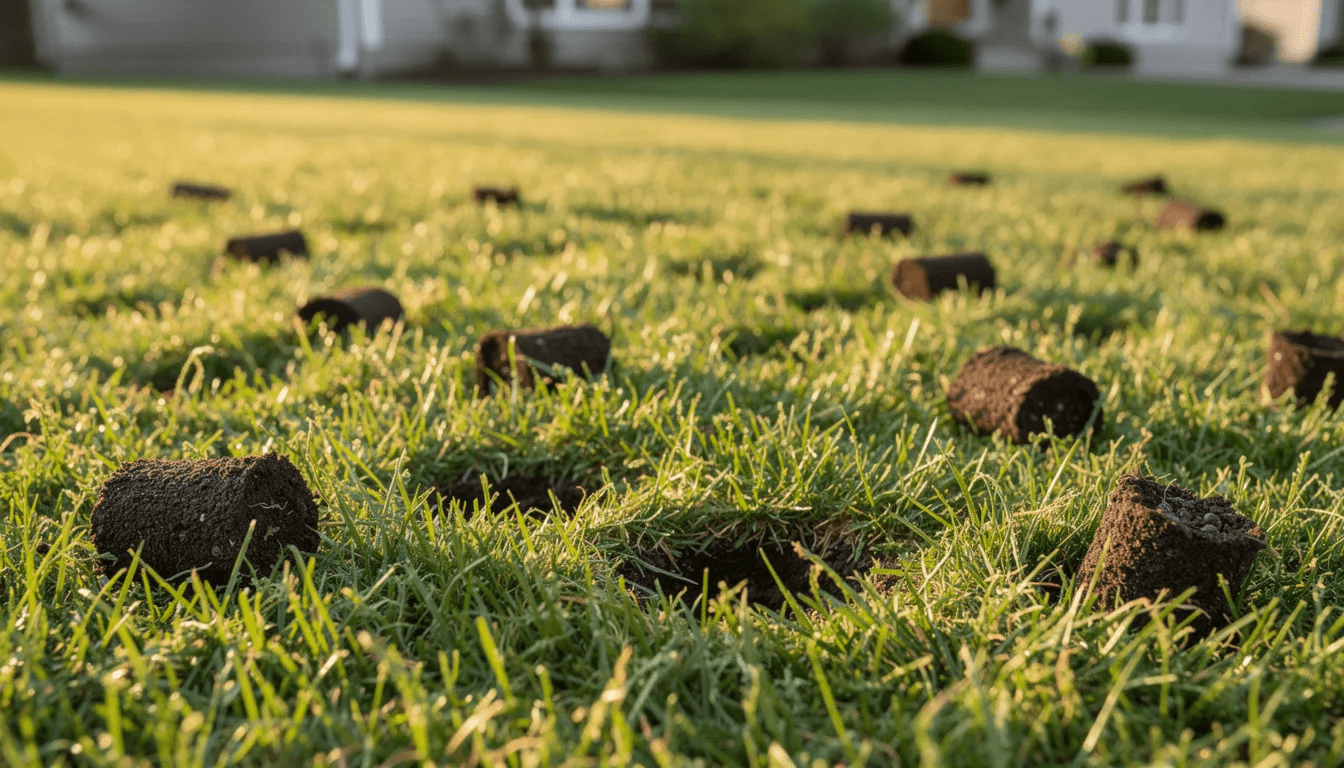
Much of Durham Region sits on clay. Add a few years of foot traffic, mowers and snow load and the top layer packs down hard enough that rain runs off instead of in, roots sit shallow, and fertilizer washes away before it feeds anything. Aeration is how we undo that.
How we aerate in Oshawa
- We walk the lawn first. Sprinkler heads, invisible dog fences and shallow cable lines get flagged so the machine misses them.
- We core, not spike. The aerator pulls thousands of finger-sized soil plugs, opening real channels instead of pressing clay tighter.
- We double up on the worst areas. Compacted paths, boulevard strips and play areas get a second pass at an angle.
- We leave the plugs to melt back in. They break down within a couple of weeks and bring soil life back to the surface.
Why the timing matters
Aeration works best when the grass can grow into the openings. For Kentucky bluegrass, ryegrass and fescue lawns, that is the late-summer window from mid-August to mid-September: soil is warm, nights are cooling, and fall rain is coming. It is also the perfect moment to overseed, because seed that falls into aeration holes gets soil contact and shelter, and to apply fall fertilizer, which reaches the roots through the open channels.
Signs your lawn needs aeration
Push a screwdriver into the soil a day after rain. If it will not slide in 10 cm with hand pressure, the ground is compacted. Other tells: water pooling on the surface or running straight off to the driveway, thin tired grass along the routes people and dogs actually walk, and a spongy thatch layer building up because soil microbes cannot reach it. Two or more of those and aeration will do more for the lawn than any bag of fertilizer.
What to expect afterwards
The lawn looks a little rough for ten days, then noticeably better within a month: greener, springier underfoot, and quicker to drink up rain. Water deeply once a week if the sky does not do it for you (our homepage rain gauge will tell you), and mow as normal.
Aeration, dethatching and overseeding are the renovation trio for tired lawns; many customers book them together as one fall visit. Request a free quote and we will tell you honestly which of the three your lawn actually needs.
What's included
- Walk-through to flag sprinkler heads and shallow lines
- Core aeration of the full lawn, two passes on problem areas
- Plugs left to break down and feed the surface
- Advice on watering and feeding after aeration
- Optional overseeding while the holes are open
Lawn aeration, answered
When is the best time to aerate a lawn in Ontario?
Mid-August to mid-September for the cool-season grasses that grow here. The grass is entering its strong fall growth, so the holes recover fast, and it lines up with the ideal window for overseeding and fall fertilizer. Early spring is the backup window.
What is the difference between core and spike aeration?
Core aeration removes plugs of soil; spike aeration just pushes holes in, which can compact clay further. On the heavy soils around Oshawa we core aerate.
How do I know my lawn needs aeration?
Water pooling or running off instead of soaking in, hard ground a screwdriver will not slide into, thinning grass on high-traffic paths, and thatch building up are the classic signs.
What are the benefits of lawn aeration?
Deeper roots, better drainage, more effective fertilizer and thicker growth. On compacted clay it is the single highest-impact treatment a struggling lawn can get.
Should I leave the soil plugs on the lawn?
Yes. They look untidy for a week or two, then rain and mowing break them down, returning soil microbes to the surface where they help digest thatch.
Do you aerate commercial properties?
Yes, including larger sites. Ask for a commercial quote.