Leaf removal
Serving Oshawa and Durham Region
- Season
- October to November
- Frequency
- 1 to 3 visits
- Typical visit
- About an hour
The short answer
Leaves left in a thick layer block light, hold moisture against the grass and shelter snow mould through winter. We mulch light cover back into the lawn and rake, bag and set out heavy cover for Durham Region's curbside yard waste collection.
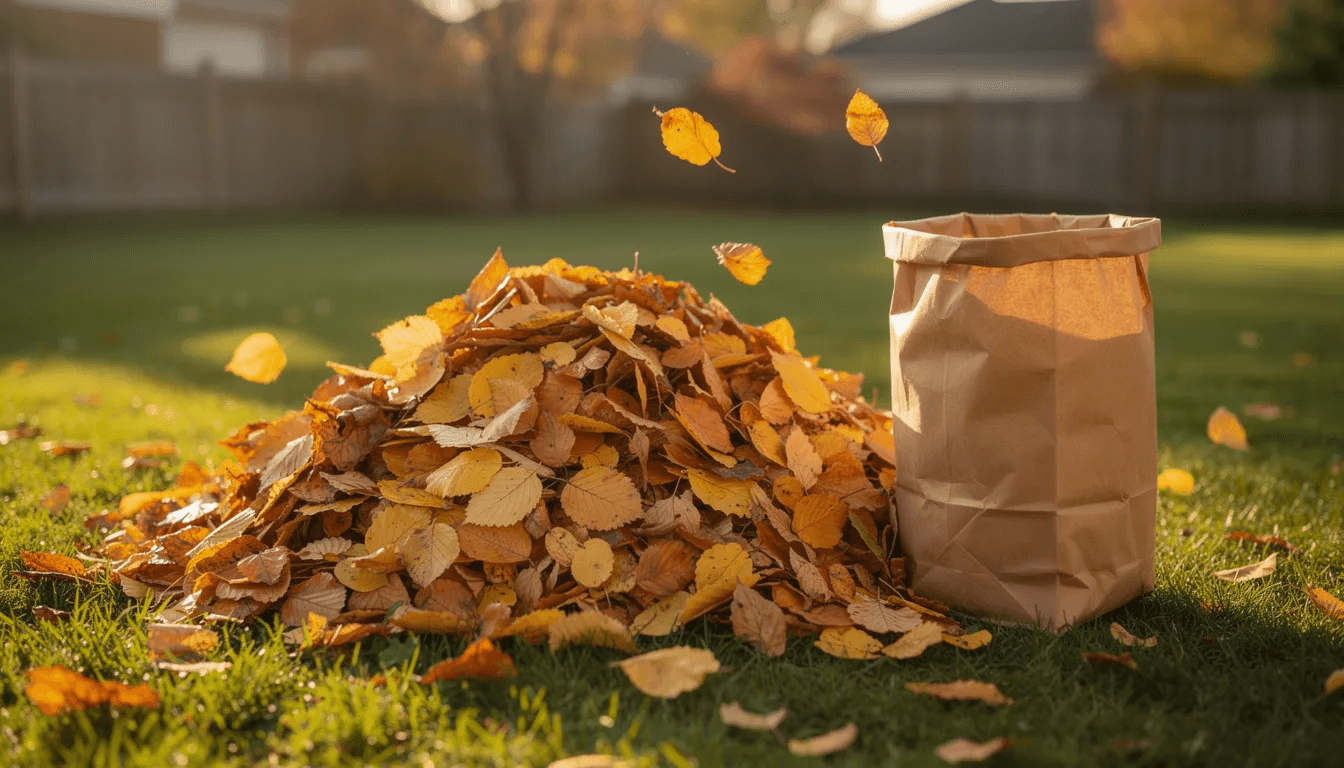
A forest floor can absorb its own leaves. A lawn cannot. Cool-season grass does some of its most important growing in October, building roots for next year, and a blanket of leaves cuts off the light exactly when the grass needs it. The fix is not always removal, though. The right call depends on how deep the leaves lie, and about half the time the simplest answer is a mower, not a rake.
How we deal with your leaves
- We judge the cover before choosing a tool. If you can still see grass through the leaves, they can be mulched in place. If the lawn has disappeared, they need to come off.
- We mulch light cover into the turf. A mower pass shreds dry leaves into confetti that drops between the blades and breaks down into the soil within a couple of weeks.
- We rake and blow heavy cover into piles. Off the lawn, off the walkways, out of the corners where the wind stacks them knee deep.
- We bag for curbside collection. Everything goes into paper yard waste bags, set out to match Durham Region’s yard waste pickup, never into the garbage.
When leaf season runs in Oshawa
The main drop runs from mid-October to mid-November. Maples let go early and fast; oaks hold their leaves well into November and sometimes shed all winter. One visit after the main drop suits most lawns. Streets with heavy tree cover do better with 2 or 3 lighter passes, because a fresh 10 cm layer can bury a lawn in a single windy weekend. The last visit should land before the first lasting snow.
What happens to a lawn left under leaves
A wet leaf mat blocks light, traps moisture against the blades and smothers the grass in weeks, which is why the patches under leaf piles come up yellow. Left through winter, the mat becomes a nursery for snow mould and a roof for voles, which tunnel and chew the turf underneath it. And leaves that blow around all winter end up packed into beds and fence lines, turning a one-hour fall job into a half-day spring one.
If you want the beds, perennials and final mow handled in the same visit, book a full fall yard cleanup instead; leaf removal is part of it. During the regular season, our mowing service mulches light leaf fall as part of the cut. Request a free quote and tell us roughly how many trees you are dealing with.
What's included
- Leaf cover assessed: mulch or remove
- Light cover mulch-mowed into the turf
- Heavy cover raked and blown into piles
- Leaves bagged in paper yard waste bags
- Bags set out to match Durham Region collection
Leaf removal, answered
Is it better to mulch leaves or remove them?
Mulch when you can still see grass through the leaves; the shredded pieces feed the soil. Remove when the cover is thick, wet or matted, because a mower just packs that down instead of shredding it.
How many leaf visits does a typical yard need?
1 to 3 between mid-October and late November. One visit after the main drop covers most lawns; heavy maple or oak cover usually needs 2 or 3 lighter passes.
Can leaves go out with the garbage?
No. Durham Region collects leaves as yard waste, in kraft paper bags or open rigid containers, on a seasonal schedule. We bag and set them out to match it.
Do wet leaves change the job?
Yes. Wet leaves cannot be mulched cleanly and weigh several times what dry ones do, so after rain the job shifts to raking and bagging. It is one reason we watch the forecast when scheduling.