Grub control
Serving Oshawa and Durham Region
- Season
- Late summer to early fall
- Frequency
- Yearly, preventive or curative
- Typical visit
- Under an hour
The short answer
White grubs are beetle larvae that eat grass roots, so damaged turf lifts like loose carpet. We treat Oshawa lawns with beneficial nematodes in late summer to early fall, when the grubs are small and near the surface, and plan the repair of anything they have killed.
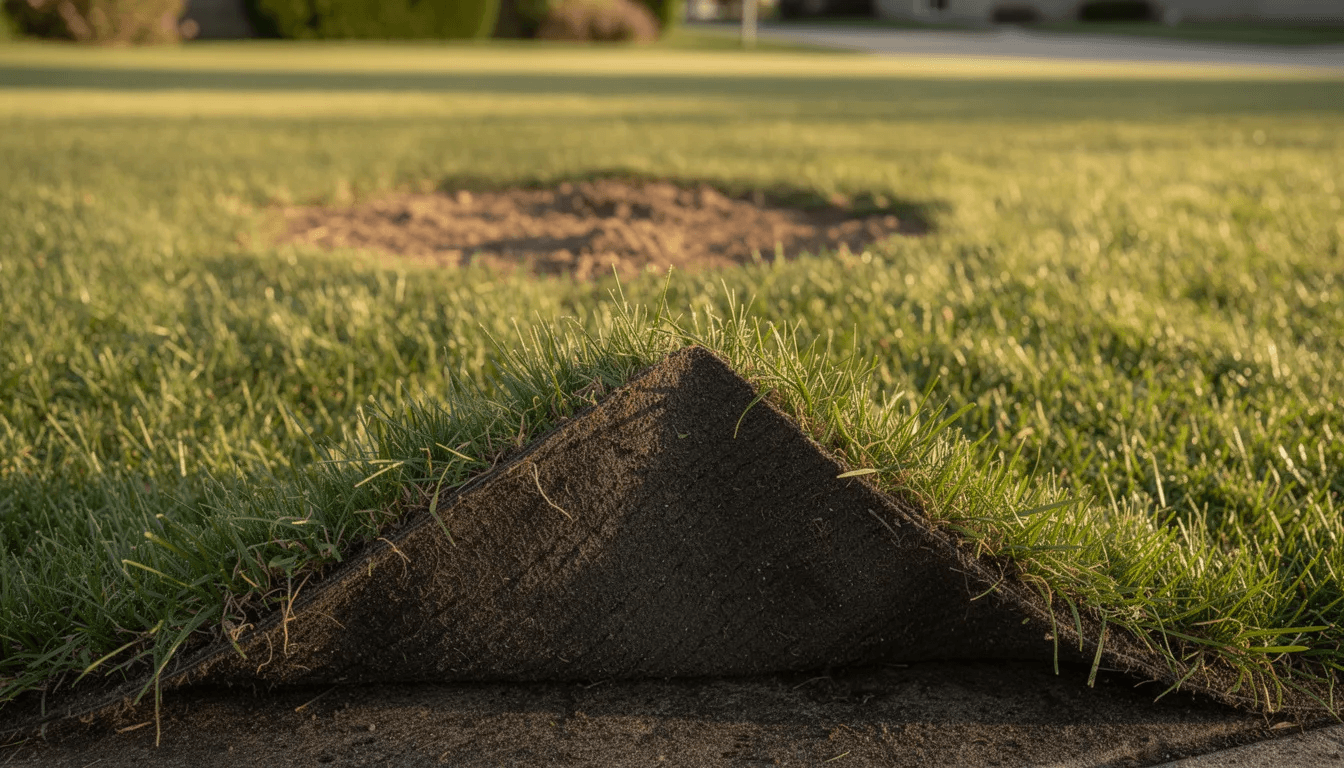
If a patch of your lawn peels up like loose carpet, grubs have already eaten the roots under it. White grubs are the larvae of the European chafer, June beetle and Japanese beetle, and from midsummer on they feed on grass roots a few centimetres below the surface. Often the first sign is not brown grass at all but a skunk or raccoon tearing up turf overnight to eat them. The fix is a treatment timed to when the grubs are small, plus repair of whatever the grubs and the animals have wrecked.
How we treat grubs
- We confirm it is actually grubs. We peel back a 30 cm square of turf in a few spots and count the C-shaped white larvae. Brown patches have plenty of other causes, and a healthy lawn tolerates a few grubs, so we treat only when the numbers justify it.
- We apply beneficial nematodes. Ontario’s cosmetic pesticide rules take most chemical grub killers off the table for home lawns, so we use beneficial nematodes, microscopic organisms that seek out grubs in the soil and kill them from the inside.
- We water them in. Nematodes need moist soil to travel and die quickly in direct sun, so the lawn is watered before and after application, ideally on a cloudy day or toward evening.
- We map the repair. Spots where the roots are fully gone will not regrow on their own, so we note what needs topsoil and seed once the grubs are handled.
Why late summer is the window
The beetles lay eggs in early summer, and the new generation of grubs hatches into the top few centimetres of soil in August. That is the curative window: the grubs are small, shallow and vulnerable, and the soil is still warm enough for nematodes to work. By October the grubs dig down for winter, and by spring they are large, deep and hard to kill. Preventive applications earlier in summer target the eggs and hatchlings before damage starts, which is the better plan for lawns hit two years running.
Signs grubs are in your lawn
Irregular brown patches in late summer that lift with a gentle tug. Turf that feels spongy underfoot because it is floating on severed roots. Skunks, raccoons or flocks of starlings working the lawn at dawn. Any of these is worth a peel-back test before the damage spreads.
Grub damage rarely ends with the treatment, since the dead spots need rebuilding. Most customers pair this service with lawn repair or a fall overseeding to close the gaps. Request a free quote and we will check whether grubs are really the problem first.
What's included
- Turf peel-back inspection to confirm grubs and count them
- Beneficial nematode application across affected areas
- Watering-in so the nematodes reach the root zone
- Timing advice for preventive treatment next season
- A repair plan for turf the grubs have already killed
Grub control, answered
When should grubs be treated in Ontario?
The curative window is late August into September, when newly hatched grubs are small and feeding near the surface. Preventive treatment goes down earlier in summer, around egg laying. Spring treatment is the least effective because the overwintered grubs are large and tough.
How do I know the damage is grubs and not something else?
Grab a brown patch and pull. Grub-damaged turf lifts with almost no resistance because the roots are gone. Drought and disease patches stay anchored. Skunks or raccoons digging small holes overnight is another strong clue.
Why nematodes instead of a chemical grub killer?
Ontario's cosmetic pesticide rules restrict most chemical grub controls on home lawns. Beneficial nematodes, microscopic organisms that hunt grubs in the soil, are the standard option here, and they work well when applied in the right window and watered in properly.
How many grubs are too many?
A healthy lawn shrugs off a few. As a rule of thumb, more than about 5 grubs under a 30 cm by 30 cm flap of turf is enough to cause visible damage and worth treating.
Will my lawn recover on its own?
Light root feeding often regrows through fall once the grubs are dealt with. Larger patches where the turf has fully died need repair with topsoil and seed, or the space fills with weeds instead.