Weed control
Serving Oshawa and Durham Region
- Season
- May to October
- Frequency
- Every 6 to 8 weeks
- Typical visit
- Under an hour
The short answer
We treat weeds on a program of visits every 6 to 8 weeks from May to October: pre-emergent in spring to stop crabgrass before it sprouts, post-emergent through summer and fall for dandelions, clover and thistles. If weeds return between visits, we re-treat at no cost.
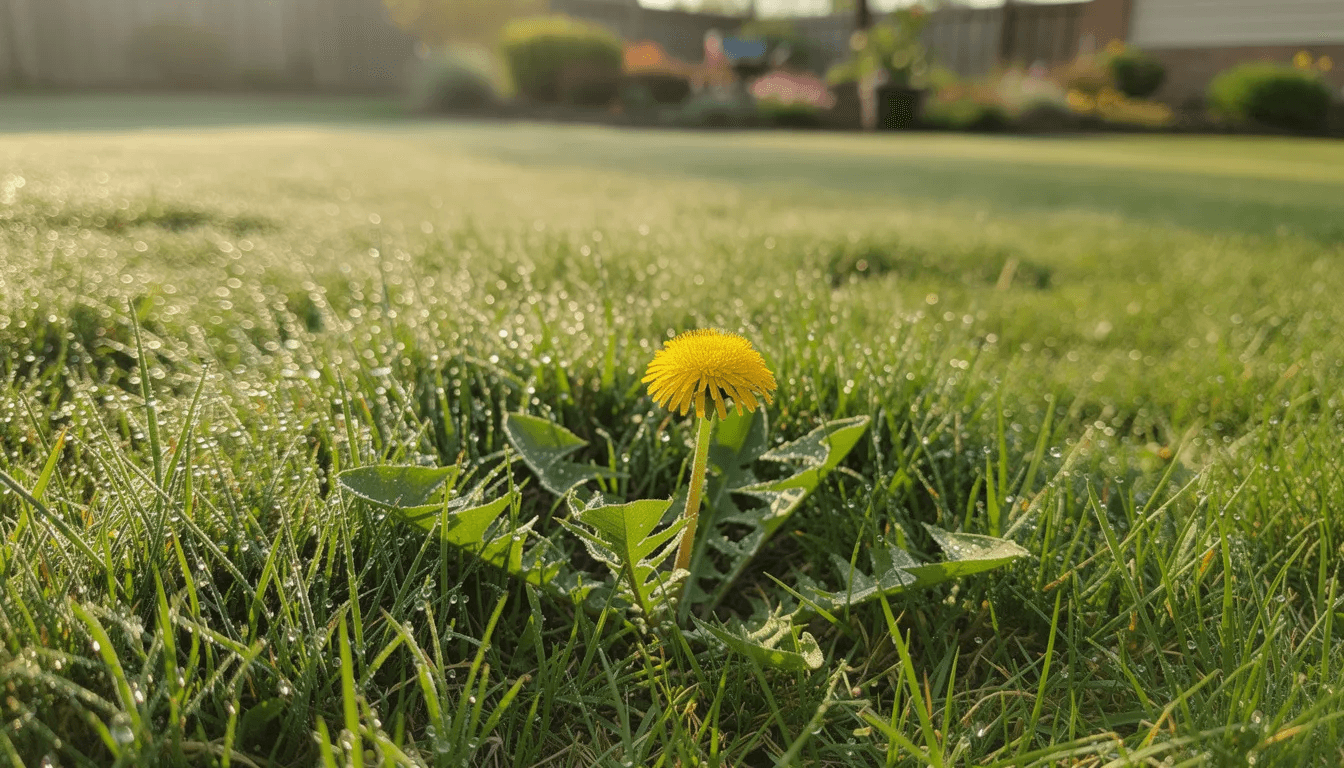
Every weed in your lawn is filling a gap the grass left open. Spray the weed and ignore the gap, and a new one moves in next season. So our weed control works both ends of the problem: scheduled treatments knock down what is growing now, and the advice that comes with them helps your grass grow dense enough that new arrivals cannot get established.
How we get weeds under control
- We identify what is growing. Broadleaf weeds such as dandelions, clover and thistles take different products than grassy invaders like crabgrass, so a walk-through comes before any treatment.
- We match the product to the season. Pre-emergent in spring stops crabgrass before it germinates; post-emergent through summer and fall handles whatever is already up.
- We return every 6 to 8 weeks. Weeds germinate in waves through the growing season, and a single visit only catches one wave. The program catches them all.
- We back it with a guarantee. If weeds reappear between visits, we come back and re-treat at no cost.
When weed treatments run
The program runs May to October. Spring is for pre-emergent, because crabgrass germinates as the soil warms and the product must be down first. Summer visits target the broadleaf weeds that flower through the heat. Fall is the best window of all for perennial weeds like dandelions, because they are pulling energy down into their taproots and carry the treatment with it. Prefer to avoid synthetics entirely? Ask about our organic options, including corn gluten meal as a natural pre-emergent.
Signs your lawn is losing to weeds
A few dandelions after a wet week are normal. Patches of clover spreading year over year, crabgrass claiming the driveway edge every July, or thistles coming back in the same spot no matter how often you pull them are not. Those patterns mean the underlying turf is too thin to defend itself, and treatments alone will not fix that.
That is why the customers with the fewest weeds pair this program with fertilization to thicken the grass and regular mowing at the right height to shade the soil. Tell us what is coming up in your lawn and request a free quote; we will tell you what it is and what it will take to be rid of it.
What's included
- Lawn inspection to identify broadleaf and grassy weeds
- Pre-emergent treatment in spring, post-emergent in summer and fall
- Visits every 6 to 8 weeks through the season
- Organic options such as corn gluten meal on request
- Free re-treatment if weeds return between visits
- Advice on mowing and feeding so the grass closes the gaps
Weed control, answered
What weeds can you control?
Broadleaf weeds like dandelions, clover and thistles, and grassy weeds like crabgrass. The two groups need different products and different timing, which is why we identify what is growing before we treat anything.
How long does it take to see results?
Broadleaf weeds usually start curling and yellowing within days of a post-emergent treatment and are gone within 2 to 3 weeks. Pre-emergent results are invisible by design: the crabgrass that would have sprouted simply never shows up.
Is weed control safe for kids and pets?
We follow label re-entry times, which for most products means staying off the lawn until it has dried, usually a few hours. We let you know after each visit when the lawn is ready, and organic options are available if you want them.
Do you offer organic weed control?
Yes. Corn gluten meal works as a natural pre-emergent, and we pair it with cultural care, thicker seeding and higher mowing, that squeezes weeds out. Organic programs need a little more patience but they do work.
What if weeds come back after treatment?
We re-treat at no cost. If weeds return between your scheduled visits, call us and we come back, that is the guarantee the program is built on.
How do I prevent weeds between treatments?
Mow high, around 6 to 8 cm, water deeply rather than often, and feed the lawn on schedule. Dense grass shades the soil so weed seeds never get the light they need to establish.