Lawn disease control
Serving Oshawa and Durham Region
- Season
- Spring and fall
- Frequency
- As needed
- Typical visit
- Under an hour
The short answer
We diagnose the disease before treating it, then fix the conditions that let it spread: watering habits, mowing height, drainage and compaction. Fungicide is the last resort, not the first. The common culprits here are grey snow mould, brown patch, dollar spot, red thread, rust and fairy rings.
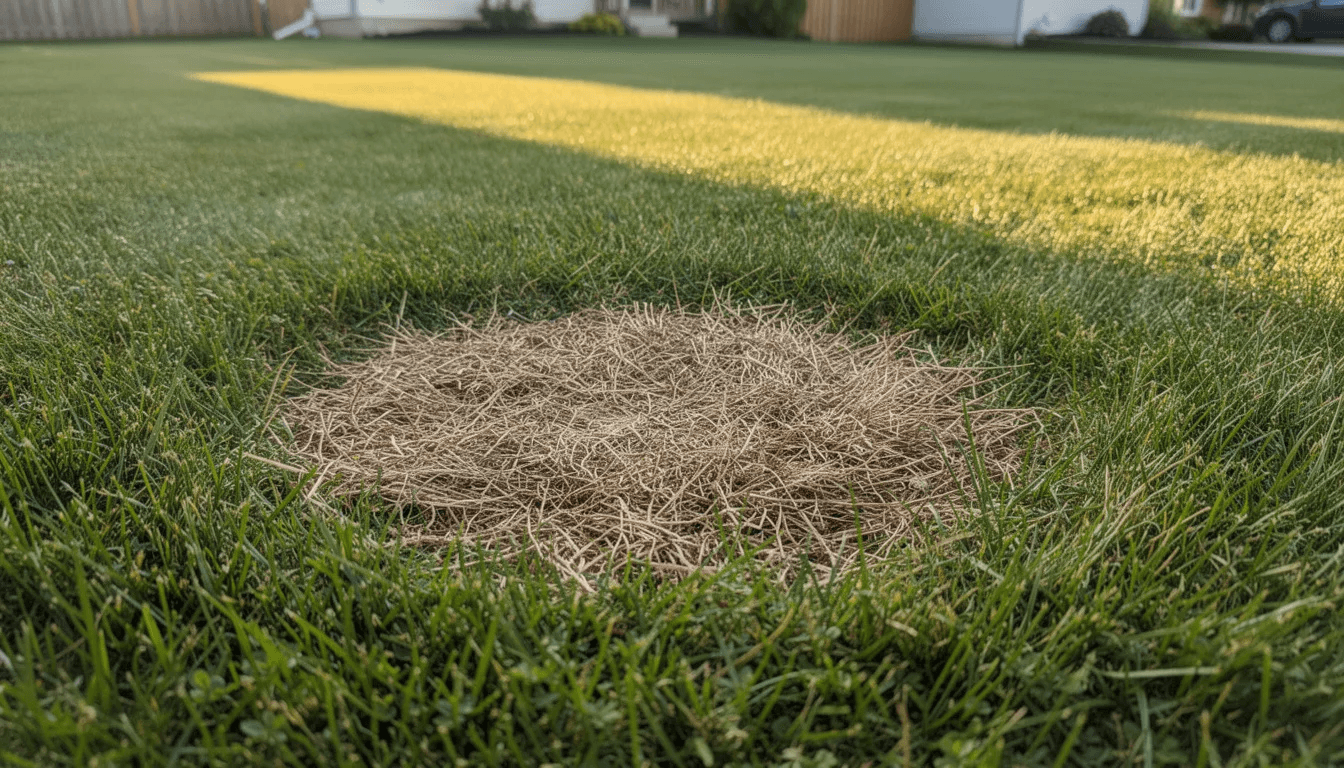
Lawn fungus is not something your lawn catches, it is something your lawn permits. The spores are in every soil, every year; disease only breaks out when conditions tip in their favour: grass staying wet overnight, soil too compacted to drain, turf weakened by wrong feeding or dull-blade mowing. So real disease control means changing those conditions, and reaching for fungicide only when an active outbreak will not wait.
How we treat lawn disease
- We put a name on it. Grey snow mould, brown patch, dollar spot, red thread, rust and fairy rings each have distinct symptoms, and each needs a different response. Guessing wastes a season.
- We fix the culture before the chemistry. Watering shifted to morning, mowing height corrected, thatch and airflow addressed. Most diseases stall as soon as their conditions disappear.
- We deal with the soil underneath. Poor drainage and compaction keep the surface wet and the roots weak, so aeration is often part of the prescription.
- We use fungicide as the last resort. When an outbreak is spreading faster than culture changes can stop it, a targeted fungicide protects the lawn while the underlying fixes take hold.
When disease shows up in Oshawa
Spring and fall are the busy seasons. Grey snow mould appears at melt, in matted straw-coloured circles, after 60 or more days of continuous snow cover. Dollar spot, with its silver-dollar-sized bleached spots, runs through spring and summer. Brown patch waits for the sticky heat and humidity of July. Red thread, showing pink threads on the blade tips, flags a lawn that is underfed. Rust dusts shoes orange with its yellow-orange spores in late summer and fall, and fairy rings can push up their mushroom arcs any time the weather is damp.
Signs it is disease and not something else
Disease tends to make shapes: circles, rings, arcs and spots with defined edges. Drought stress and insect damage are blotchier and follow sun, slope or traffic instead. Threads, dust or matting on the blades themselves also point to fungus. If you are not sure which you are looking at, send us a photo before you treat anything.
A well-fed lawn resists most of this on its own, which is why fertilization done right is quiet disease prevention, and lawn repair fills in what an outbreak killed. See a patch that is growing week by week? Request a free quote and we will diagnose it properly.
What's included
- On-site diagnosis of the specific disease
- Cultural fixes first: watering, mowing height and airflow
- Drainage and compaction assessment
- Fungicide treatment only when culture changes are not enough
- Recovery plan for the damaged areas
Disease control, answered
What lawn diseases are common in Oshawa?
Grey snow mould after long winters, brown patch in humid summer heat, dollar spot in spring and summer, red thread on underfed lawns, rust in late summer and fall, and fairy rings, the arcs of mushrooms and dark green grass.
What causes lawn fungus?
The fungi are always present in soil; disease breaks out when conditions favour them over the grass. Evening watering, dull mower blades, poor drainage, compacted soil and the wrong feeding schedule are the usual triggers.
Can a lawn recover from disease without fungicide?
Usually, yes. Most of the diseases we see here clear up once watering, mowing and soil conditions are corrected, which is why cultural fixes come first. Fungicide is for active outbreaks that culture changes cannot stop in time.
How do I get rid of snow mould?
Grey snow mould shows up as matted straw-coloured circles after 60 or more days of snow cover. Rake the matted patches to let air in and most recover on their own; prevention is a shorter final fall cut and clearing leaves before snow.
Does aeration help prevent lawn disease?
Yes. Compacted, poorly drained soil keeps the lawn surface wet, and nearly every turf disease loves wet. Core aeration improves drainage and airflow at the root zone, which removes the conditions most outbreaks depend on.
When should I call about a lawn disease?
When a patch, ring or colour change is spreading week over week, or when the same problem returns every year. Early diagnosis usually means the fix is cultural and cheap; a full-blown outbreak is harder on the lawn and the wallet.