Spring yard cleanup
Serving Oshawa and Durham Region
- Season
- April to May
- Frequency
- Once a year
- Typical visit
- 1 to 3 hours
The short answer
A spring cleanup clears the branches, matted leaves and plough grit winter left behind, rakes the lawn to lift snow mould mats, and recuts bed edges so the season starts clean. In Oshawa the window is mid-April to early May, once the ground firms up.
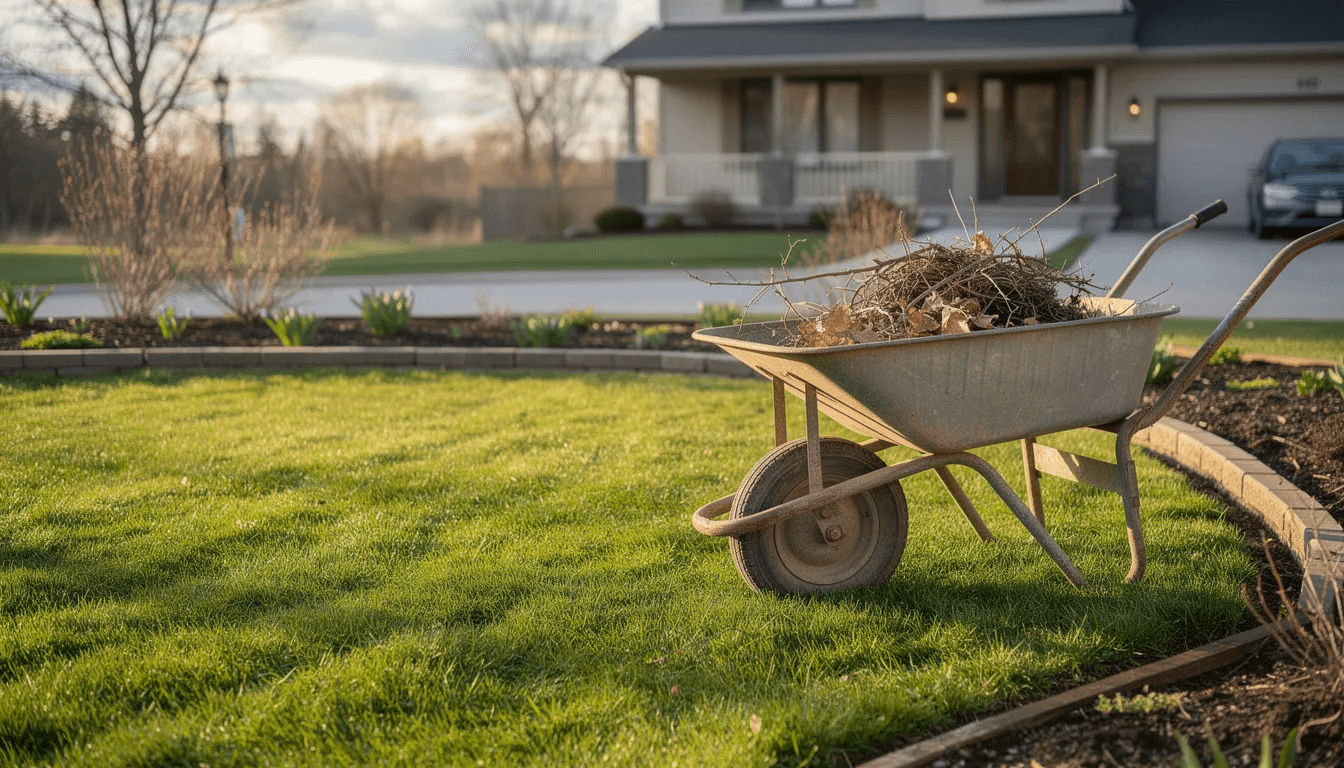
Winter is hard on a lawn even when nothing goes wrong. Snow load flattens the grass, the plough throws sand and gravel over the front edge, wind drops branches, and any leaves that dodged the fall rake spend four months matted into the turf. A spring cleanup clears all of it in one visit, so the growing season starts from clean grass instead of a repair job.
How we run a spring cleanup
- We pick up the big stuff first. Branches, twigs, litter and the grit ploughs push onto the lawn along the street and driveway.
- We rake the whole lawn, lightly. The first rake of the year lifts flattened grass, pulls matted leaves out of the turf and breaks open snow mould patches so they can dry out and fade.
- We clear the beds and recut the edges. Wet packed leaves come out of the garden beds, and the bed edges get a fresh cut for a clean line against the lawn.
- We bag everything and prep the first cut. Debris goes into paper yard waste bags at the curb, and we note anything the first mow should avoid, like ruts, bare patches or vole trails.
When to book a spring cleanup in Oshawa
Timing matters more here than people expect. Rake too early and you tear grass that is still half dormant; run equipment over soggy April ground and you compact the clay soils common in Durham Region. In most years the right window in Oshawa is mid-April to early May, after the snowbanks along the driveway are fully gone and the lawn no longer squelches underfoot. That still leaves comfortable time before the first mow of the season.
What winter leaves behind
The grey or pinkish webbed circles that show up as the snow melts are snow mould, a fungus that grows under snow on matted grass and leaves. On most lawns, a light raking that opens the mats and lets them dry is all the treatment they need; the grass fills back in as the weather warms. You may also find vole runways, shallow surface trails of chewed grass where the snow sat longest, and browned strips along the sidewalk where road salt splashed. All three look worse than they are, and if a patch does need more than patience, we will say so.
If the rake turns up a spongy brown layer thicker than about 1 cm, the lawn needs dethatching, a separate machine job we can add to the same visit. Once the cleanup is done, the lawn is ready for its first feeding and the start of regular mowing. Request a free quote and we will book you into the spring run.
What's included
- Branches, twigs and wind-blown litter cleared
- Plough gravel and grit raked off the lawn edge
- Light rake of the full lawn to lift matted grass
- Snow mould patches raked open to dry
- Beds cleared and edges recut
- Debris bagged for curbside yard waste collection
Spring cleanup, answered
When should a spring cleanup be done in Oshawa?
Mid-April to early May most years. The snowbanks should be fully melted and the ground firm enough that walking on it leaves no footprints. Earlier than that, raking and foot traffic damage grass that has not woken up yet.
What are the grey patches on my lawn as the snow melts?
Almost always snow mould, a fungus that grows under snow on matted grass and leaves. Raking the patches open so they dry is usually the only treatment needed, and the grass fills back in as the weather warms.
Is a spring cleanup the same as dethatching?
No. A cleanup is a light rake plus debris removal, done every spring. Dethatching is a machine job that pulls out the dead layer at the soil line, and it is only needed when thatch builds past about 1 cm.
What happens to all the debris?
It goes into paper yard waste bags at the curb for Durham Region's seasonal yard waste collection, which starts up again in spring.