Lawn overseeding
Serving Oshawa and Durham Region
- Season
- Mid-August to mid-September
- Frequency
- Yearly for thin lawns
- Typical visit
- About an hour
The short answer
Overseeding spreads new grass seed into an existing lawn to thicken thin turf before weeds claim the gaps. In Oshawa the window is mid-August to mid-September, ideally right after core aeration, using ryegrass, fescue and Kentucky bluegrass blends matched to your yard.
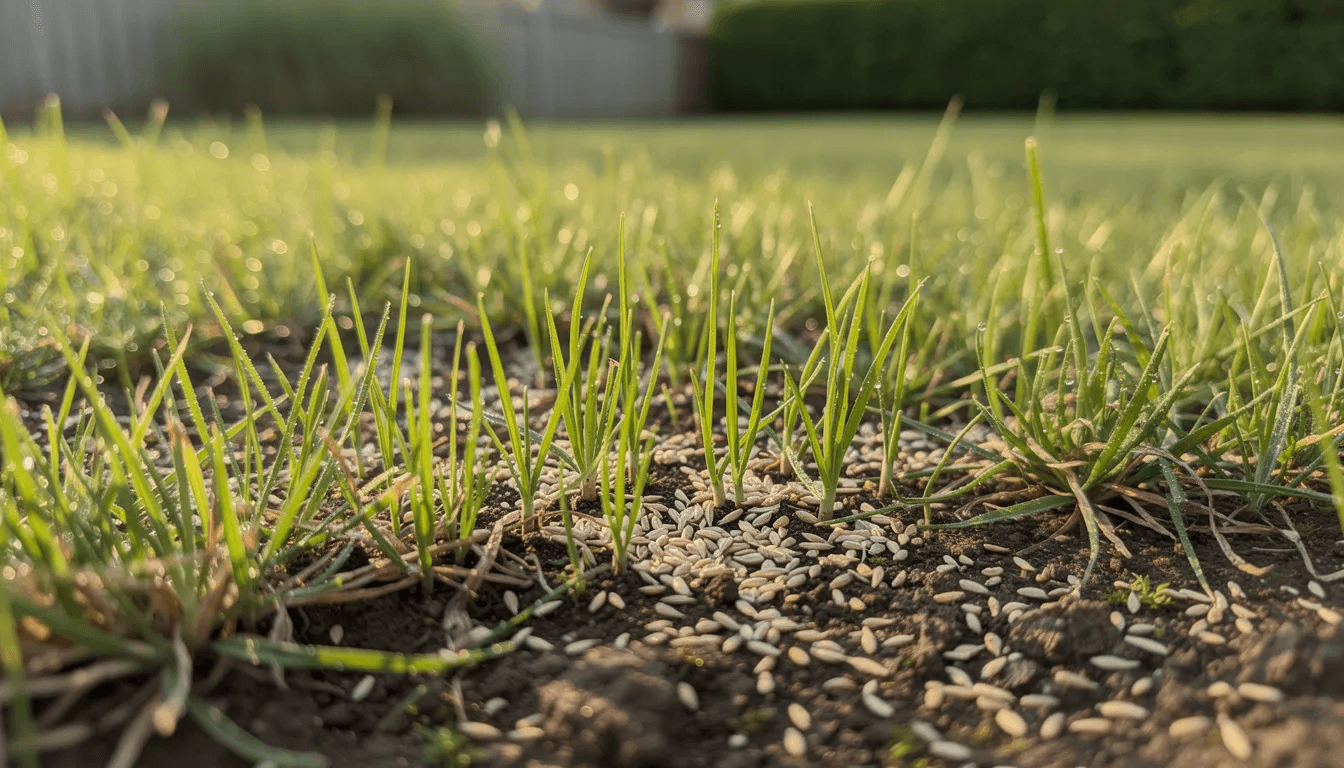
A thin lawn is an open invitation. Every gap between grass plants is bare soil waiting for crabgrass, dandelions and moss, and no amount of weed killing fixes a lawn that has too few grass plants in it. Overseeding is the direct answer: spreading new seed into the existing turf so the lawn thickens up and closes those gaps itself.
How we overseed a thin lawn
- We match the seed to the yard. Perennial ryegrass where you want quick fill, fine fescue for the shaded strip along the fence, tall fescue or Kentucky bluegrass blends where kids and dogs run. One bag does not fit every lawn.
- We get the seed to the soil. A shorter cut first, and ideally a pass of core aeration, because seed resting on thatch or hard clay mostly feeds the birds.
- We spread in two directions. Half the seed goes down one way, half at a right angle to it, which evens out the coverage and avoids striped germination.
- We leave you a watering plan. New seed lives or dies on moisture in the first 3 weeks, so you get a simple schedule instead of guesswork.
Why the window is mid-August to mid-September
Cool-season grasses germinate fastest in warm soil with cool nights, which is exactly what late summer delivers in Durham Region. Fall rain usually takes over the watering within a few weeks, and the annual weeds that choke out spring seedings are finished for the year. Seedlings then get fall plus the following spring to root before facing their first summer. Spring seeding works as a backup, but it fights weed pressure and summer heat arrives before the roots are ready.
Signs your lawn needs overseeding
You can see soil between the grass plants. High-traffic routes have worn to sparse, stemmy turf. Weeds keep returning to the same areas no matter how often they are pulled. Or the lawn is simply an older variety that browns out every July while newer lawns nearby stay green. All of these are density problems, and density is what overseeding fixes.
Overseeding pairs naturally with aeration in the same visit, and a fall feeding helps the new seedlings root before winter. Request a free quote and we will tell you whether your lawn needs a full overseed or just patch work.
What's included
- Seed blend matched to your sun, shade and traffic
- A shorter cut beforehand so seed reaches the soil
- Spreading in two directions for even coverage
- Extra seed worked into the thinnest areas
- A watering schedule to follow until the seed establishes
Lawn overseeding, answered
When is the best time to overseed in Oshawa?
Mid-August to mid-September. The soil is warm for fast germination, nights are cooling, fall rain is on the way, and the weeds that smother spring seedings are winding down. Spring is the backup window if fall was missed.
Should I aerate before overseeding?
On the clay soils around Oshawa, yes. Seed that falls into aeration holes gets soil contact, moisture and shelter, and germinates far better than seed sitting on a hard surface. We book the two together whenever we can.
What kind of grass seed do you use?
Blends suited to cool-season lawns here: perennial ryegrass for quick fill, fine fescue for shady sections, and tall fescue or Kentucky bluegrass blends where durability matters. We match the mix to your yard rather than using one bag for every lawn.
How often should I water after overseeding?
Lightly once or twice a day to keep the top few centimetres of soil moist for the first 2 to 3 weeks. Once the seedlings are up, shift to deeper, less frequent watering so the roots chase the moisture down.
When can the new grass be mowed?
Once the seedlings reach about 8 cm, usually 3 to 4 weeks after seeding. Mow with sharp blades and take off only the top third so the young plants are not torn out.