Lawn mowing
Serving Oshawa and Durham Region
- Season
- April to November
- Frequency
- Weekly or biweekly
- Typical visit
- 30 to 60 minutes
The short answer
We cut on a weekly or biweekly schedule with sharp blades, never removing more than a third of the blade, so the lawn stays thick instead of scalped. Edges and walkways are trimmed and blown clean before we leave.
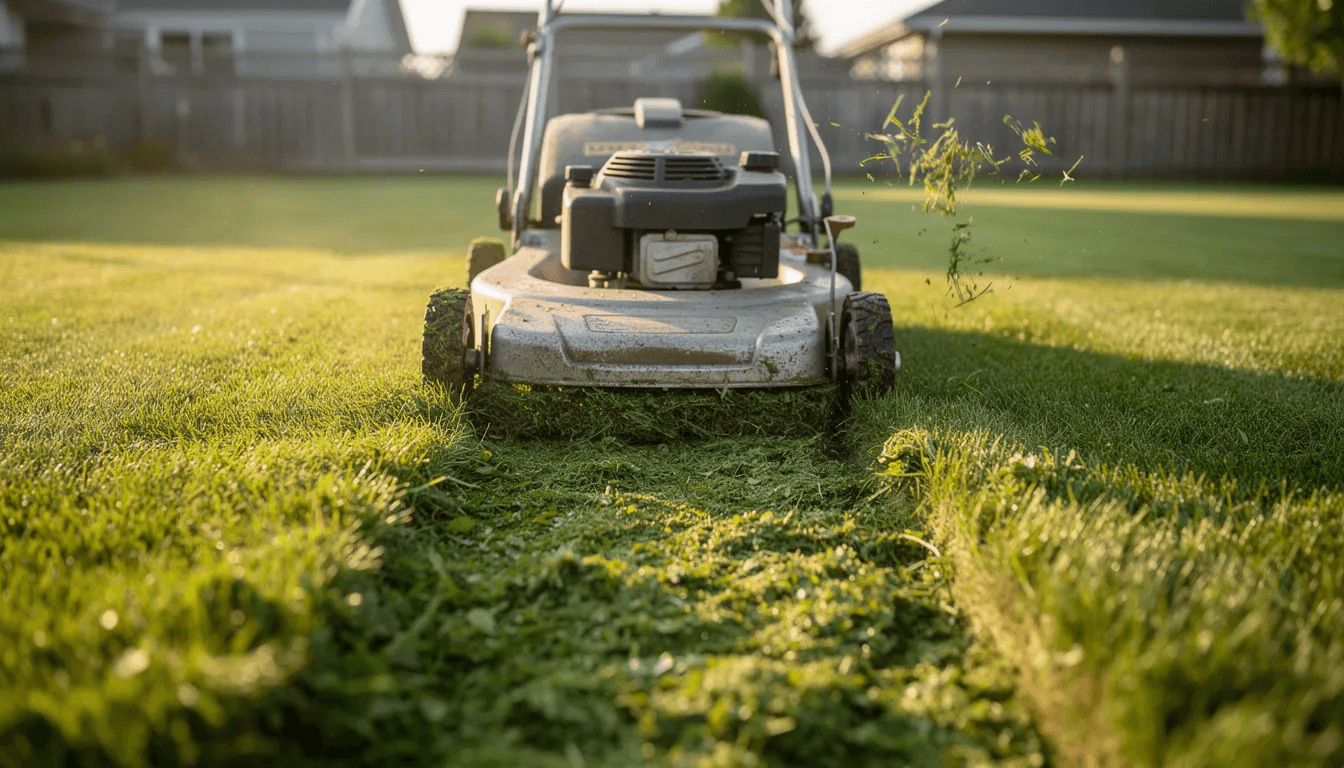
A good cut is more than short grass. Mowed at the right height, on the right rhythm, with sharp blades, a lawn shades its own roots, holds moisture and crowds out weeds on its own. Mowed wrong, it thins, browns and invites every problem we get paid to fix. That is why mowing is the base layer of everything else we do.
How we mow in Oshawa
- We look before we cut. Grass type, sun and shade, slopes, soft spots and anything the mower should avoid.
- We set the height for the season. Around 6 to 8 cm for the Kentucky bluegrass, ryegrass and fescue lawns common here, raised in summer heat, lowered slightly for the final cuts before snow.
- We cut with sharp blades and vary the pattern. Sharp steel slices instead of tearing, and alternating direction stops ruts and grain from forming.
- We trim, edge and blow off. Fence lines and beds trimmed, driveway and walkway edges cut clean, hard surfaces blown clear before we drive away.
When mowing season runs
Cutting in Durham Region usually starts in mid-to-late April, once the ground firms up, and runs to early November. Growth is fastest in May and June, slows in the July heat, then picks up again in September. Your schedule follows that curve, not a fixed calendar, so you are not paying for cuts a dormant lawn does not need.
Signs your mowing routine is hurting your lawn
Ragged, whitish blade tips a few days after a cut mean dull blades. Yellow, stemmy grass right after mowing means the cut is too short; scalping stresses the crowns and opens the soil to crabgrass. Rows of dead clumps mean the clippings sat too long. Ruts forming along the same lines mean the pattern never changes. All four disappear with the routine above, and if we see something mowing cannot fix, like grubs or a fungus patch, we tell you instead of quietly cutting around it.
Regular mowing pairs naturally with fertilization and weed control; most of our weekly customers bundle them. When you are ready, request a free quote and we will size up your lawn.
What's included
- Mowing at the right height for the season
- Trimming along beds, fences and walkways
- Edging of driveways and sidewalks
- Clippings mulched or bagged, your choice
- Walkways and driveway blown clean
- A note if we spot weeds, grubs or disease
Lawn mowing, answered
How often should my lawn be mowed in Oshawa?
Weekly through the fast growth of May and June, easing to biweekly in dry midsummer stretches. We adjust the schedule to how your lawn actually grows rather than a fixed calendar.
What height do you cut at?
Usually 6 to 8 cm (about 2.5 to 3 inches) for the cool-season grasses that grow here. Taller in summer heat to shade the roots, slightly shorter for the last cuts of fall.
Do you take the clippings away?
By default we mulch them back in, which returns nitrogen to the soil and is why we cut often enough that clippings stay short. If you prefer bagging, just say so.
Do you mow when the grass is wet?
We avoid it. Wet cuts tear the blade, clump the clippings and rut soft ground, so after heavy rain we shift your visit rather than wreck your lawn.
Can you mow commercial properties?
Yes. We maintain office, retail and multi-unit residential properties on scheduled programs across Durham Region.
What happens if I am not happy with a cut?
Call us and we come back to make it right. That policy has not changed since we started.