Lawn repair
Serving Oshawa and Durham Region
- Season
- Spring and early fall
- Frequency
- As needed
- Typical visit
- 1 to 3 hours
The short answer
Lawn repair fixes bare and dead patches by finding the cause first, whether grubs, disease, road salt, dog spots or compaction, then rebuilding with fresh topsoil and seed or sod. In Oshawa the best repair windows are early fall and spring.
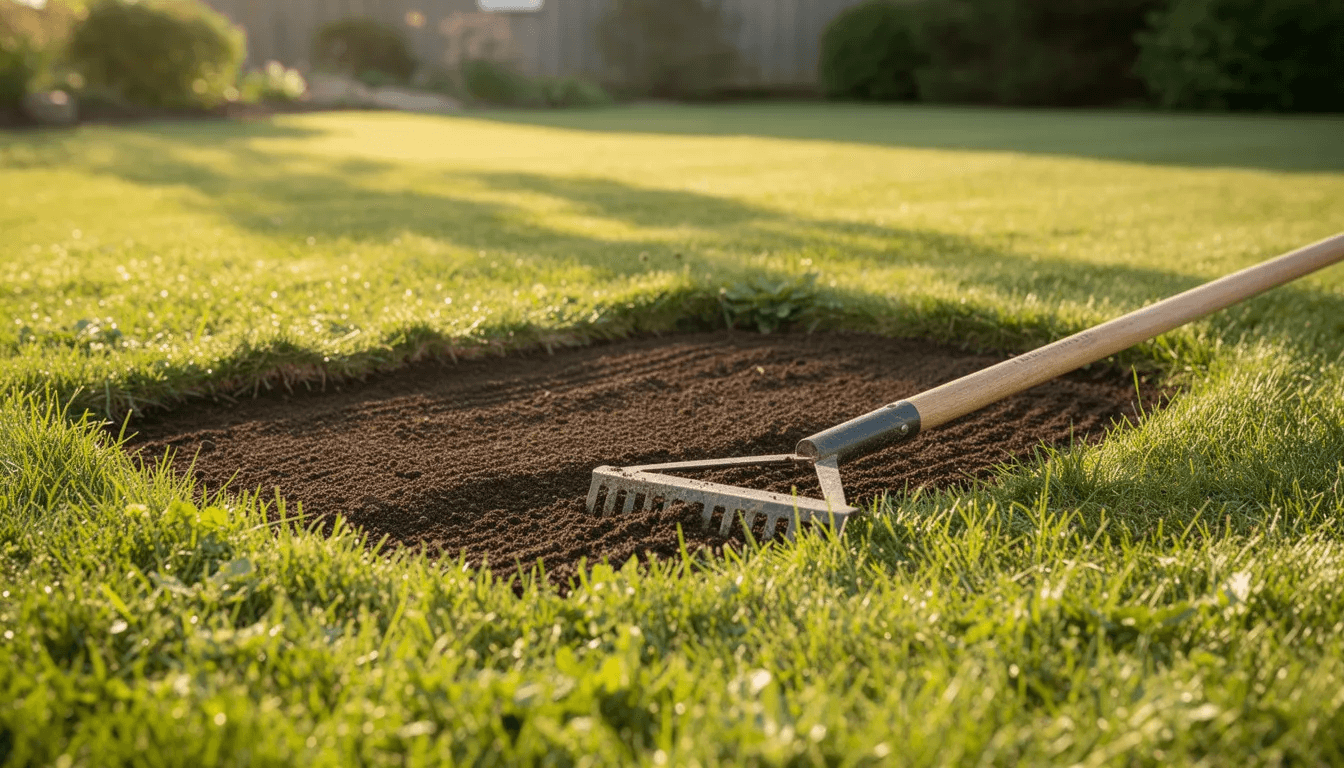
Most patch repairs fail for one reason: the patch gets fixed but the cause does not. Seed thrown on a spot where grubs are still feeding, or where road salt lands every winter, dies the same way the original grass did. So our repair work starts with a question, not a rake: what killed this patch, and is it actually dead or just dormant?
How we repair a dead patch
- We diagnose before touching anything. A tug test for grubs, a look at the pattern for disease or dog spots, a screwdriver in the soil for compaction, and a check of the location for salt exposure along driveways and walkways.
- We check the crowns. Cool-season grasses go dormant and brown in summer drought, and dormant grass needs water, not replacement. If the crowns at the base of the plants are still firm and pale, we tell you to wait and water.
- We clear and rebuild the base. Truly dead material comes out, the soil underneath gets loosened, and a layer of fresh topsoil goes down, raked smooth and level with the surrounding lawn.
- We seed or sod to match. Seed blended to your existing grass for patches that can take a few weeks to fill, or sod for spots you want green this weekend. Then deep, infrequent watering once it is established, so the new roots grow down instead of sideways.
The best seasons for repair work
Early fall is the prime window in Durham Region: warm soil, cooler nights and fall rain give seed the easiest start, and grubs and disease from the summer have shown themselves by then. Spring is the second choice, good for winter damage like salt burn and snow mould scars, though spring repairs need closer watering once summer heat arrives. Midsummer repairs are possible with sod and discipline, but seed struggles.
Common causes of dead patches here
Grubs cutting roots in late summer. Fungal patches that spread outward in rings or arcs. A strip of straw-coloured turf along the driveway where salty slush lands, which is salt damage. Round spots with dark green edges where the dog goes. Bare, rock-hard routes where feet cross the lawn daily, which is compaction. The repair only holds once the cause is named and handled.
If grubs turn out to be the culprit, grub control comes first and the repair second. For a lawn that is thin everywhere rather than dead in spots, overseeding is the better tool. Request a free quote and we will start with the diagnosis.
What's included
- Diagnosis of what actually killed the patch
- A check whether the grass is dead or just dormant
- Dead material removed and the soil loosened
- Fresh topsoil, then seed or sod to match the lawn
- Deep watering guidance while the repair establishes
Lawn repair, answered
Is my brown grass dead or just dormant?
Part the blades and look at the crowns, the pale knuckles where the shoots meet the soil. Dormant crowns are firm and creamy white, and the patch greens up within a week or two of regular watering. Dead grass has brown, brittle crowns and pulls free with no resistance.
What kills patches of lawn around Oshawa?
The usual suspects are grubs eating the roots, fungal disease, road salt along driveways and sidewalks, dog urine spots, and soil compacted so hard nothing can root in it. Each one needs a different fix, which is why we diagnose before we repair.
Do you repair with seed or sod?
Both, depending on the spot. Seed costs less and blends into the surrounding lawn as it matures. Sod gives an instant fix for front-yard patches you do not want to stare at for six weeks. The base preparation is the same either way.
Why do my patches come back every year?
Because the cause was never dealt with. Reseeding over active grubs feeds the next generation, and reseeding a salt-burned driveway edge fails again the next winter. Fix the cause, then the patch, in that order.
How should I water a repaired patch?
Keep seeded patches lightly moist every day until germination, then switch to deep, infrequent watering so the roots grow down. Sodded patches need daily water for the first 2 weeks before tapering off.