Preparing your lawn for fall
Also called fall lawn care, autumn lawn preparation
By Oshawa Lawn Care · Updated
- You need
- A rake, A spreader, Fertilizer, Grass seed, An aerator
- Effort
- Moderate
- Time
- About 3 h
The short answer
Fall is when next year's lawn is made. In Oshawa that means feeding between mid-August and mid-September, overseeding and aerating in the same window, keeping leaves off the grass, a second feeding in late October, and a slightly shorter final cut so nothing mats under the snow.
As the warm days wind down in Oshawa, the temptation is to park the mower and call it a season. But for the cool-season grasses that grow here, fall is not the wind-down; it is the setup. The work you do between mid-August and the first snow decides what greets you in April. Here is the checklist we follow, in the order the season demands it, along with the rest of our lawn guides.
What you need
- A leaf rake and a mower
- A fertilizer spreader and fall fertilizer (a soil test tells you the right mix)
- Grass seed if the lawn is thin
- A core aerator, rented or booked as a service
When to do what: the mid-August to mid-September window
Three jobs share the same ideal window, and they help each other, so stack them.
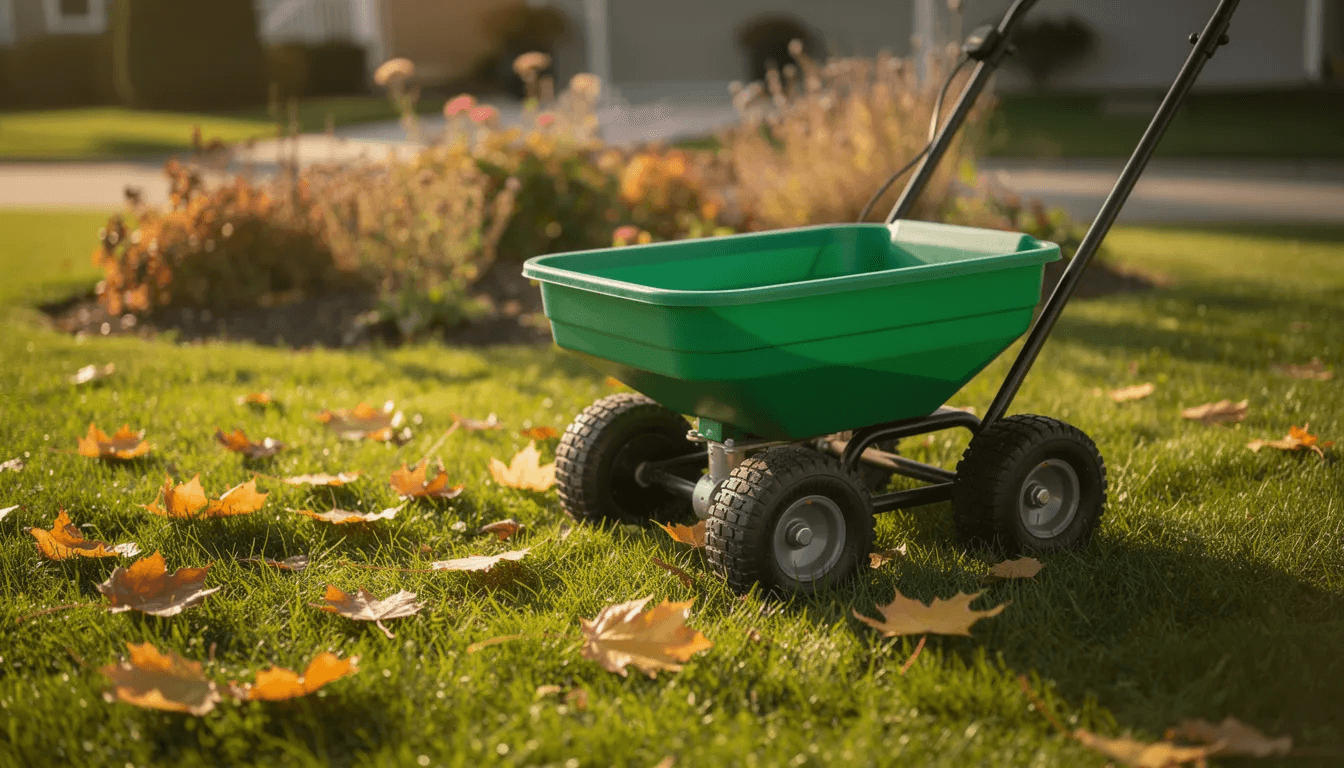
- Feed the recovery. Summer heat leaves turf drained. A fertilizer with nitrogen and potash between mid-August and mid-September restarts growth and hardens the grass for winter. Aim for about 0.5 kg of nitrogen per 100 m2 so you feed the lawn without burning it, and let a soil test set the exact type and mix.
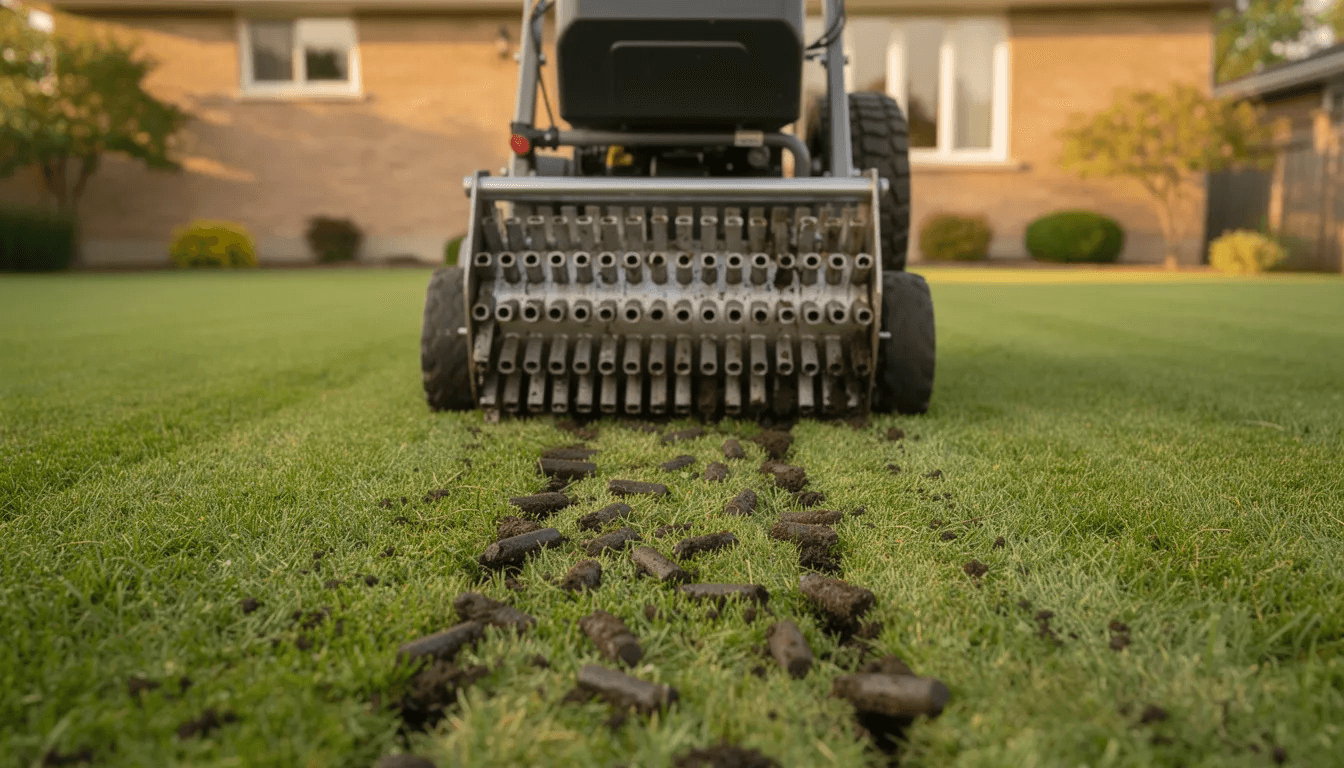
- Aerate the compaction away. Core aeration pulls plugs of our heavy clay, breaks up thatch and lets the fall rain reach the roots. It also opens thousands of perfect seed pockets.
- Overseed the thin spots. Spread seed in two directions for even coverage, ideally right after aerating. Around Oshawa, perennial ryegrass fills in fast, fine fescue handles the shady side of the house, and tall fescue shrugs off dry spells. Seeded now, grass establishes before winter.
Through October
- Keep the leaves moving. Whole leaves left on grass block light and kill patches under the first snow. Rake the heavy falls, or mulch-mow light ones into confetti the lawn can digest. Our leaf removal service exists for exactly the two brutal weeks when the maples let go.
- Step the mowing height down. Keep cutting as long as the grass keeps growing, lowering the deck gradually for the last few cuts. Long blades mat under snow and feed mould; just never remove more than a third at once.
- Feed once more, late. In mid-to-late October, when growth has stopped but the lawn is still green, a second application stocks the roots for winter and buys you the earliest green-up on the street.
- Stay on the weeds. Perennial weeds establishing in fall are spring’s first problem. Pull or spot-treat them now; a dense, well-fed lawn does most of this work by itself.
Before the snow flies
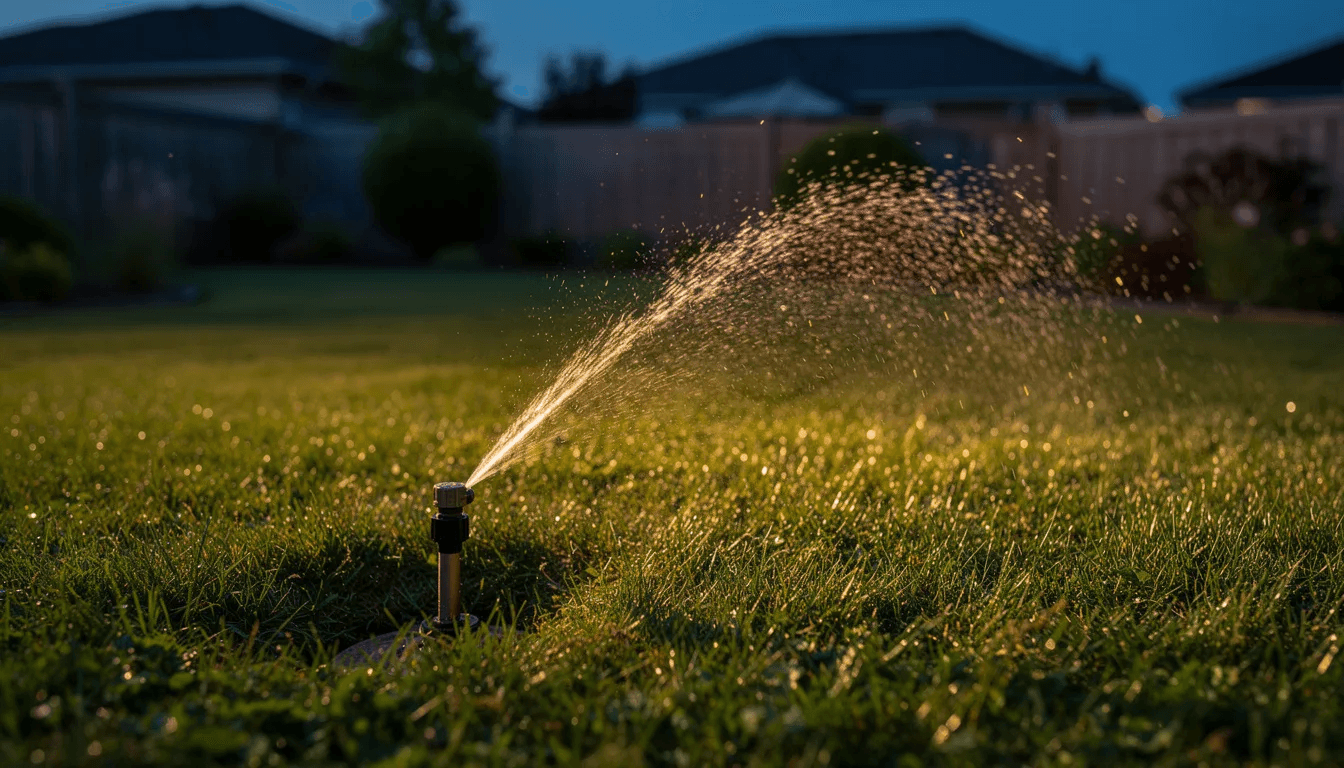
- Water if the fall is dry. Needs drop, but roots still drink. Deep and infrequent, as in our watering guide.
- Protect the surface. Keep heavy objects off the grass, avoid piling shovelled snow on the same corner of lawn all winter, and stay off it once it is frozen; foot traffic on frozen crowns shows up as dead lines in May.
Watch for late-season disease
Stressed fall lawns are where the season’s diseases make their move. Red thread shows as pink strands binding the blade tips together. Rust dusts your shoes orange when you cross the lawn in September. Dollar spot leaves bleached patches the size of its name. And a winter of 60-plus days under snow breeds grey snow mould, the matted crust so many Oshawa lawns wake up with. The fixes above, feeding, thatch control, shorter final cuts and leaf removal, are the real prevention; fungicide is a last resort after the culture is right. If a patch looks wrong and you cannot name it, our disease control service will diagnose it before treating anything.
Why bother, honestly
Because spring is too late. April grass grows on the energy its roots banked in October, seed sown in May fights weeds that fall seed never meets, and the fertilizer window you miss now cannot be made up by doubling the dose later. An afternoon or two of fall work, or one booked visit if you would rather not, is the cheapest good lawn you will ever buy. The neighbours whose lawn turns green two weeks before everyone else’s in April are not lucky; they raked in October.
Preparing your lawn for fall, answered
When should I fertilize my lawn in fall in Ontario?
Twice: once between mid-August and mid-September to help the lawn recover from summer, and again in mid-to-late October, when the grass has stopped growing but is still green. The late feeding fuels root growth and an early green-up in spring.
Do I have to rake every leaf?
No. A light scattering can be mulch-mowed into the lawn and feeds it. What you cannot leave is a smothering mat of whole leaves; under snow it blocks light and incubates snow mould.
How short should the last cut of the year be?
A step shorter than your summer height, taken down gradually over the final few cuts. Long grass mats under snow and invites mould; scalped grass exposes the crowns. Do not drop more than a third of the blade in any one cut.
What is snow mould and can I prevent it?
A fungus that grows under snow cover longer than about 60 days, showing up as matted grey or pink patches at melt. Fall prevention is the cure: leaves off, thatch controlled, a shorter final cut, and no giant snow piles parked on the lawn.