When to water your lawn, and how much
Also called lawn watering schedule, how often to water grass
By Oshawa Lawn Care · Updated
- You need
- A hose or sprinkler
- Effort
- Very light
- Time
- About 30 min
The short answer
A lawn in southern Ontario needs about 25 mm of water a week, rain included, delivered deeply once or twice rather than a little every day. Water at dawn or dusk, measure with a tuna can, and skip the sprinkler entirely in weeks when rain covers the total.
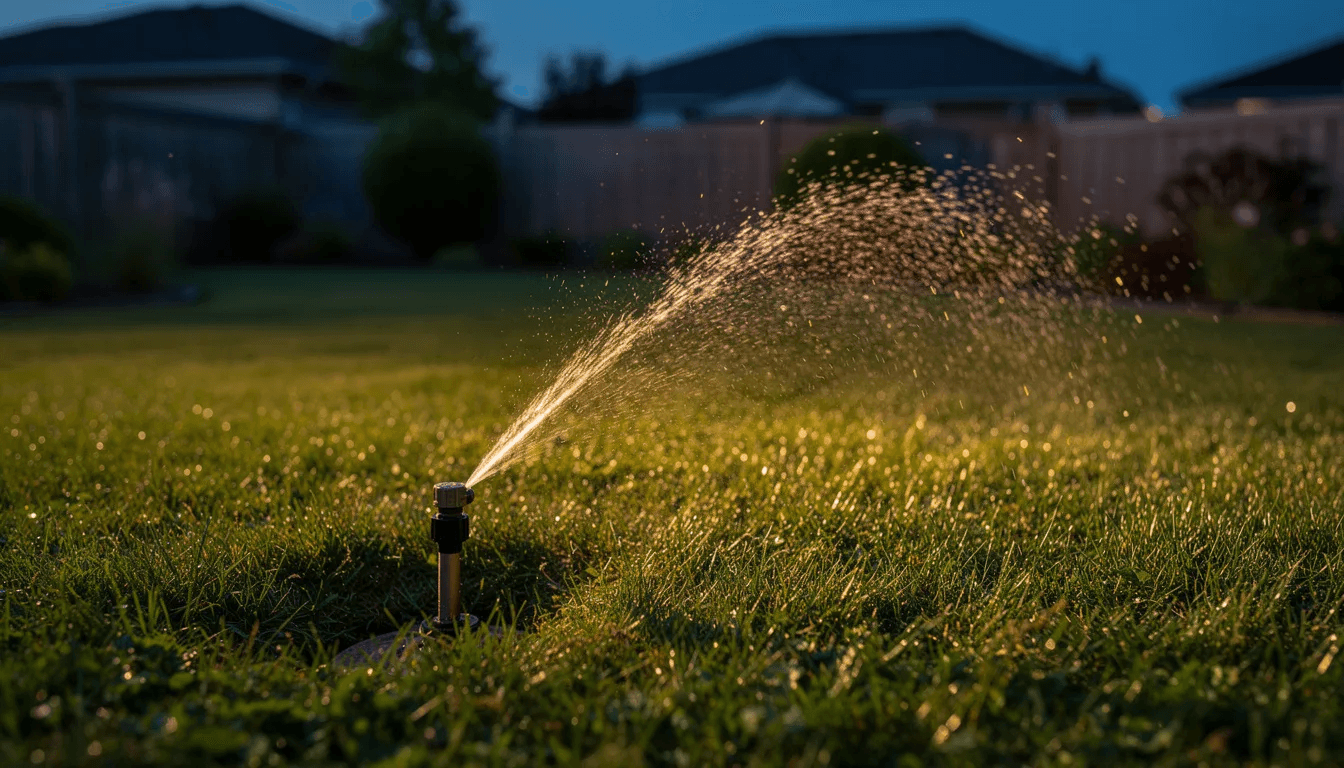
Watering is the easiest lawn job to get wrong in both directions. Most browning lawns we visit in July are either watered a little every evening, which trains roots to stay near the surface, or not at all through a five-week drought. The fix is one simple weekly number, and it is the number behind the live rain gauge on our homepage and the rest of our lawn guides: 25 mm a week, rain included.
What you need
- A hose and any sprinkler, or an irrigation system
- A straight-sided can (a tuna can is the classic) or a rain gauge
- Ten minutes once to time your sprinkler
When to water in Ontario
The short version: water when the week’s rain will fall short of 25 mm, and do it at dawn or dusk. Cool-season grasses like Kentucky bluegrass, perennial ryegrass and fescue do most of their growing in spring and fall, when southern Ontario rain usually covers the bill on its own. The stretch that actually needs your hose is late June through August, when heat is up and rain gets patchy.
Morning, around sunrise, is the ideal slot: little evaporation, low wind, and the blades dry off during the day. Evening is a good second choice. Midday watering mostly feeds the atmosphere.
How to water deeply, step by step
- Check the week’s rain first. Look at the 7-day forecast (our homepage does this automatically for Oshawa). If it totals 25 mm or more, stop here.
- Time your sprinkler once. Set a straight-sided can inside the spray pattern and note how long it takes to fill to 25 mm. That is your weekly run time.
- Water once or twice a week, not daily. One deep session, or two half-sessions on heavy clay where water pools, pushes moisture down where roots should grow.
- Water at dawn or dusk. Set an alarm or a cheap hose timer; the same minutes of water go twice as far as at noon.
- Subtract any rain that falls. If 10 mm lands midweek, your sprinkler owes the lawn 15 mm, not another full session.
How much is 25 mm, really
| Situation | What it means |
|---|---|
| 25 mm in the can | One full week’s watering done |
| 1 hour oscillating sprinkler | Roughly 10 to 20 mm, measure yours |
| A good summer thunderstorm | Often 10 to 25 mm on its own |
| Clay soil puddling | Split the session in two, an hour apart |
| New seed or sod | Different rules: light and frequent until established |
New seed and new sod play by different rules
Everything above applies to established lawns. Fresh seed and new sod need the opposite routine for their first weeks: light, frequent watering that keeps the top few centimetres consistently moist, sometimes twice a day in warm weather, because seedlings and unrooted sod have no deep roots to reach stored moisture. Once the new grass is established and has been mowed a few times, taper over two or three weeks onto the deep-and-infrequent schedule. Flipping a new lawn straight onto weekly watering is one of the most common ways freshly repaired patches die a second time.
Tips
- Footprints that stay pressed into the lawn are the classic early thirst sign; water that evening or next dawn.
- A lawn that gets morning sun and afternoon shade needs meaningfully less than the strip beside a south-facing driveway. Watch the dry spots, not the average.
- On slopes and hard clay, run the sprinkler until water just starts to run off, pause half an hour, then finish. More of it ends up in the ground.
- Check your local watering rules first: Durham Region asks residents to water lawns on odd or even days matching their house number through the summer months, which the once-a-week deep approach fits neatly.
- If a dry lawn has already gone brown and dormant in August, you can let it sleep; it will wake with September rain. Just do not let it flip between dormant and lush repeatedly, which drains its reserves. Our fall preparation guide covers the recovery feeding that follows a dry summer.
When to water your lawn, and how much, answered
How long should I run the sprinkler to get 25 mm?
It depends on the sprinkler, so measure once: set out a straight-sided can and time how long it takes to fill 25 mm deep. Most oscillating sprinklers take somewhere between 1 and 2 hours.
Is it better to water in the morning or evening?
Dawn is best: the water soaks in before the sun evaporates it and the grass dries during the day. Dusk is second best; blades staying wet all night slightly raises the fungus risk, but it beats watering at noon.
Should I water every day in a heat wave?
No. Daily light watering grows shallow roots that suffer more in heat. Keep to deep, infrequent watering; an established lawn can also simply go dormant and brown in a hot dry spell, then green up again with rain.
Does rain count toward the weekly amount?
Fully. That is exactly what the rain gauge on our homepage checks: when the 7-day Oshawa forecast reaches 25 mm, you can leave the sprinkler in the shed.